
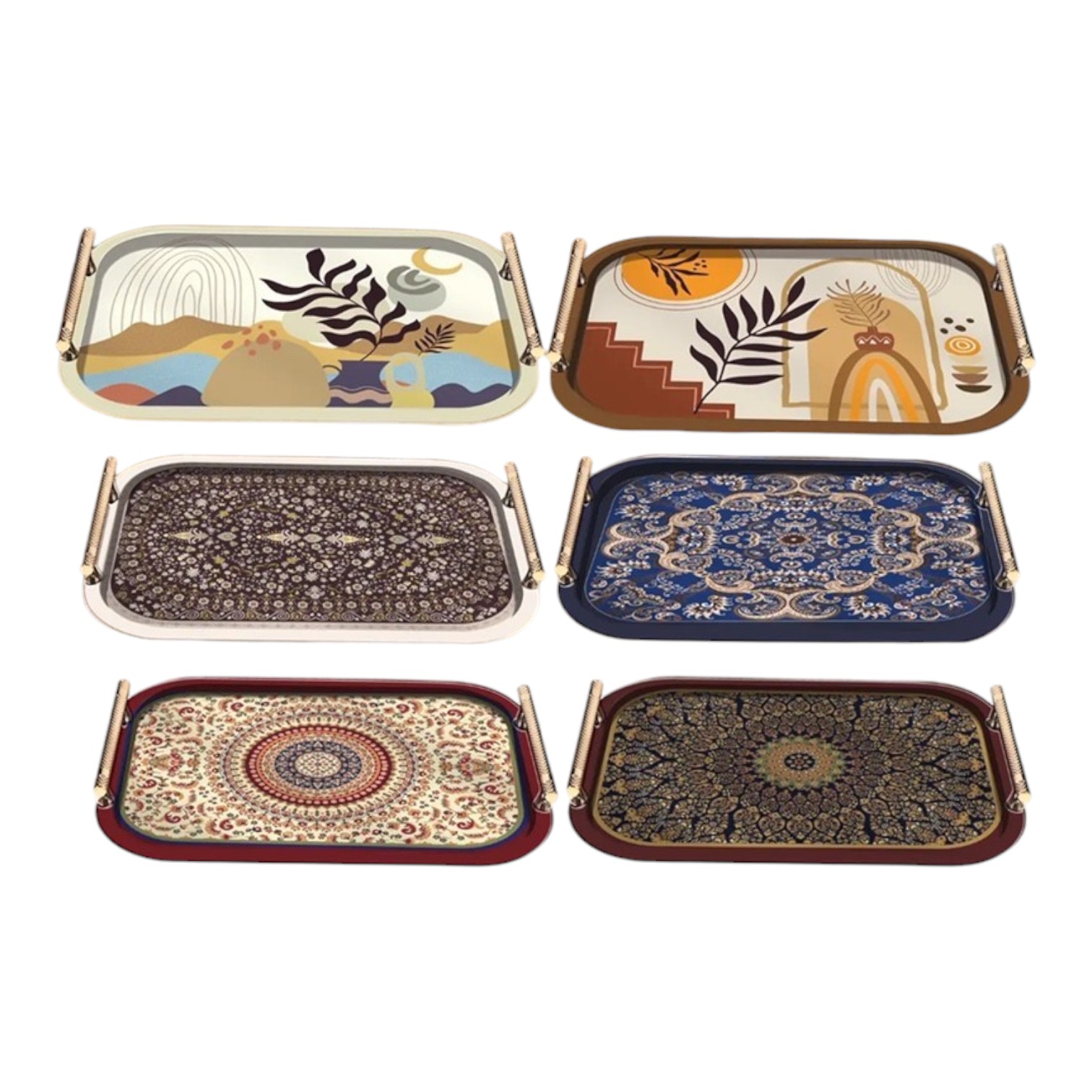
Product Details
Tray
Tray, a simple container that carries order and efficiency. In the daily interweaving of digitalization and physical space, it stores fragments and circulates objects in the most inconspicuous posture, forming an underestimated skeleton in the workflow.
Node for temporary storage and flow of goods
The essence of a tray is to provide a temporary anchor point for moving items. It cuts off the rush of linear transportation, allowing actions to be completed in segments. Whether it is the waiting area for paper documents or the transfer medium for cups and plates in service scenarios, pallets transform clutter into controllable batches in an almost silent manner.
In refined process design, the size, material, and stacking method of pallets often determine the rhythm of circulation. A heat-resistant, anti slip, and slightly curled edge structure can safely stitch together physical fragility and operational efficiency.
“The tray does not create content, it is only responsible for carrying it. But it is this silent containment that allows content to move smoothly, be seen, and processed”
Metaphors and extensions in interfaces
When the physical world is projected onto the screen, the concept of a tray is abstracted as a storage compartment at the bottom of the system. It still follows the most primitive logic: collecting programs running in the background and waiting to be awakened or cleaned up. This visual folding and extension provides users with a clear sense of belonging in digital multitasking.
Designers repeatedly polish the response speed and visual hierarchy of this interactive area, essentially guarding a sense of psychological security for temporary storage. It is anchored at the edge of the screen, neither overly disturbing nor within reach, perfectly inheriting the edge and support properties of a physical tray.
The Aesthetics of Blank Space and the Boundary of Tray
A vacant tray itself is a strong spatial suggestion. It heralds the upcoming filling or just finished cleaning. In minimalist visual language, the boundary lines of the tray form the implicit framework of the image, consolidating scattered elements into an interpretable whole.
This tolerance for emptiness has elevated the tray beyond its mere tool attribute, becoming a silent declaration about order, waiting, and possibility.
Related Products
No related products found.